If you’re heading into fall and one of your hives just isn’t as full or busy as the others, it’s a great time to pause and decide whether it will survive winter or should be combined with another hive.
Combining weak hives before winter is a simple way to help your bees head into the cold season as one stronger cluster. If done before treating for varroa mites, it will also save you money on treatments that would be wasted in a weak hive.
How to Know a Hive Is Weak
Population
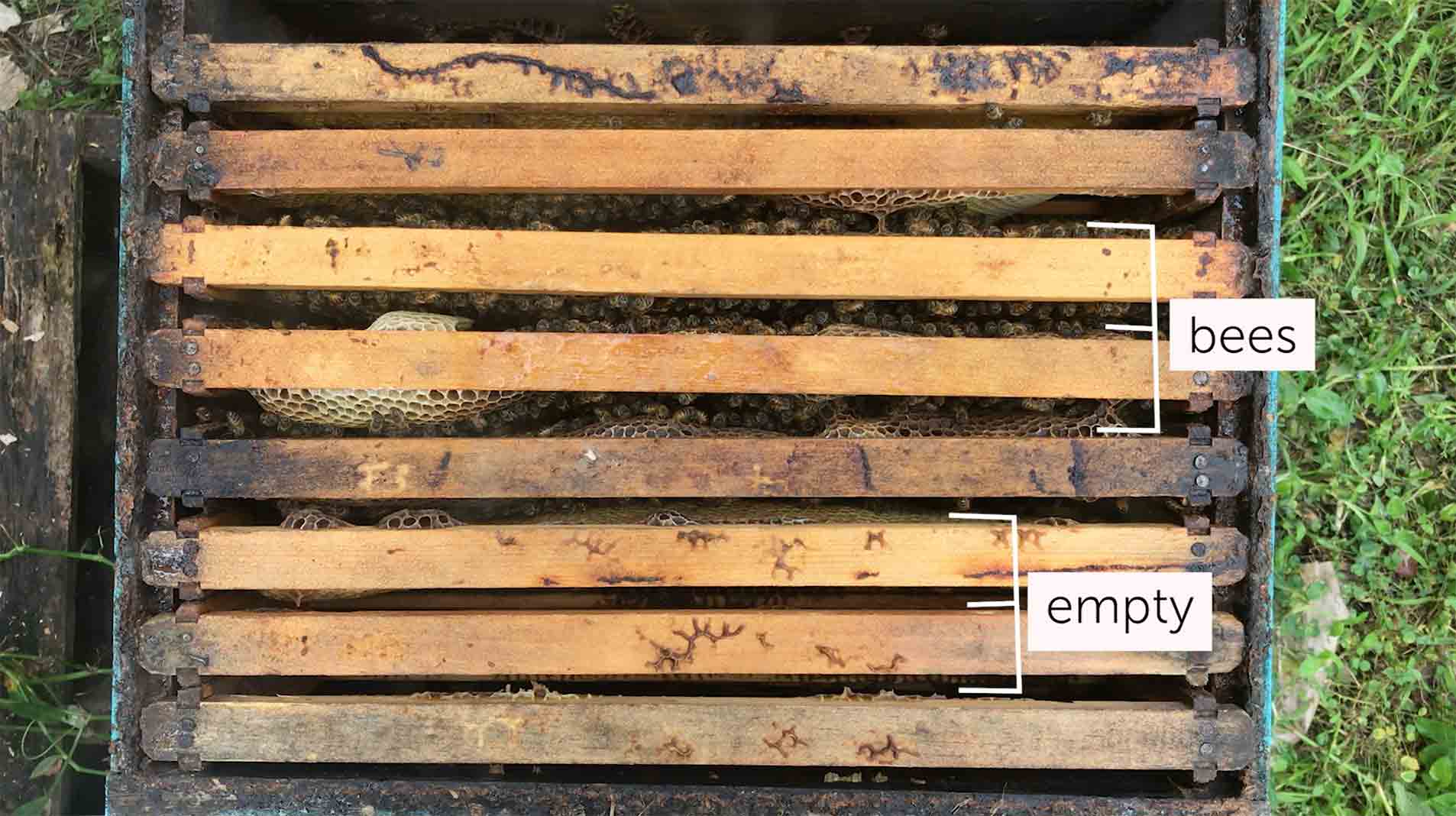
First, take a look at the population. Are bees covering most of the frames in the brood boxes, or are there a lot of empty frames with just a handful of bees? You want there to be at least 4 frames covered in bees. Think back to when you first purchased your nuc or package of bees. Is your hive as heavily populated as it was then, or are there fewer bees?
Below is a photo of a hive with a weak population. Before you even take a frame out, look in the seams between frames. Do you see a lot of bees there, few, or none at all?
You want to see over 100 bees on both sides of at least 4 frames in the hive.
Queen Bee Status
Next, do they have a laying queen? If it is 6 weeks or less before you will be closing your hive up for winter (around when daytime temperatures are going below 65F more often than not), and your hive does NOT have a laying queen, then your hive is considered weak. It is probably too late in the season to introduce a new queen to the hive.
Brood Count
Finally, how much brood is in the hive? It is okay if you are not seeing a lot of eggs in the hive. This can possibly be due to a lack of nectar coming in and you can feed your bees syrup in the ratio of 1:1. This means equal parts sugar is mixed with water. This simulates a nectar flow and will encourage your queen to lay more. However, you want to look at how much brood overall there is in the hive. If there is 4 frames or less with brood on them or the brood frames have small patches of brood and most of the cells are empty, then this is a weak hive.
It’s important to remember that a smaller hive in late summer due to being split or swarmed, doesn’t usually stay small especially if they have a healthy queen. But if you’re seeing a low population, spotty brood, and not much honey, that’s when you should consider combining.
The Beekeeper's Intuition
One last question to ask yourself before combining hives is, "Do I think this hive is weak?" The information listed above is only part of what the beekeeper considers when deciding if a hive should be combined with another. It's also important to spend time with your bees throughout the season, especially in your first few years as a beekeeper, so that when there's a problem, you just know it before you even begin to count the frames and look at the brood. If you feel that the hive stands a chance, let them try! In the wild, hives do their best and there is no one to combine them. It is perfectly okay to leave nature to run it's course and not intervene.
Now That You've Decided Your Hive is Weak
What to Consider Before You Combine
Before you move any boxes, here’s what I check first:
1. Queen health. If this hive has a queen in it, but you are certain it should be combined with another hive because it is weak and underpopulated, the queen in this weak hive MUST BE PINCHED. It is one of the worst parts of beekeeping, but an important step. If you merge two hives together are both have a queen, one or both of the queens will be killed. You do not want the healthy queen in the strong hive to be the one that dies.
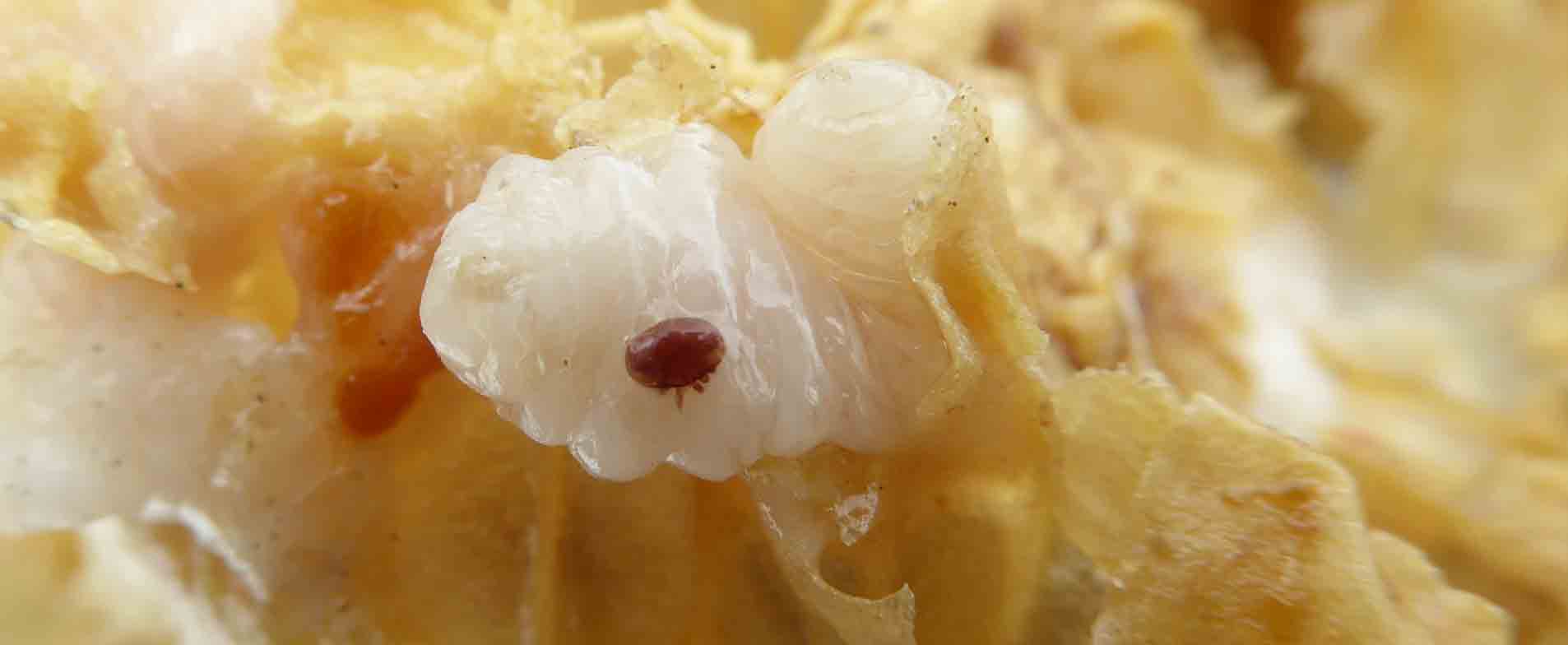
2. Mites and disease. Not all hives are weak because of queen issues. Infestations from wax moth, small hive beetles and varroa mites can also severely weaken a hive. Even if a hive has a low mite load or if they went too long with a lot of mites before a treatment was put in, the viruses in the hive will linger for a long time. Signs of a wax moth infestation are larvae crawling on the comb and webbing across the frame. Signs of a small hive beetle infestation are beetles crawling around multiple frames and larvae and slime on the comb. Signs of a varroa mite infestation or a lot of viruses would be deformed wings on bees, varroa mites spotted on adult bees in the hive and varroa mites seen on pupae pulled out of the comb.
How I Combine Weak Hives, Step-by-Step
This is the newspaper method I use, and it works really well.
Step 1: Choose your bottom hive. This will be your stronger hive with the laying queen you want to add the bees to.
Step 2: Consolidate the weak hive to one box. Remove all frames from the box except the brood frames. Place brood frames together and move to the center of the box. Place one frame of honey on either side of the brood. If you do not have 2 frames of honey, use a frame of drawn out comb or push the frames to the wall of the box and put a frame on the other side of the brood. Ideally, there is something on either side of the brood frames to keep the bood from getting chilled.
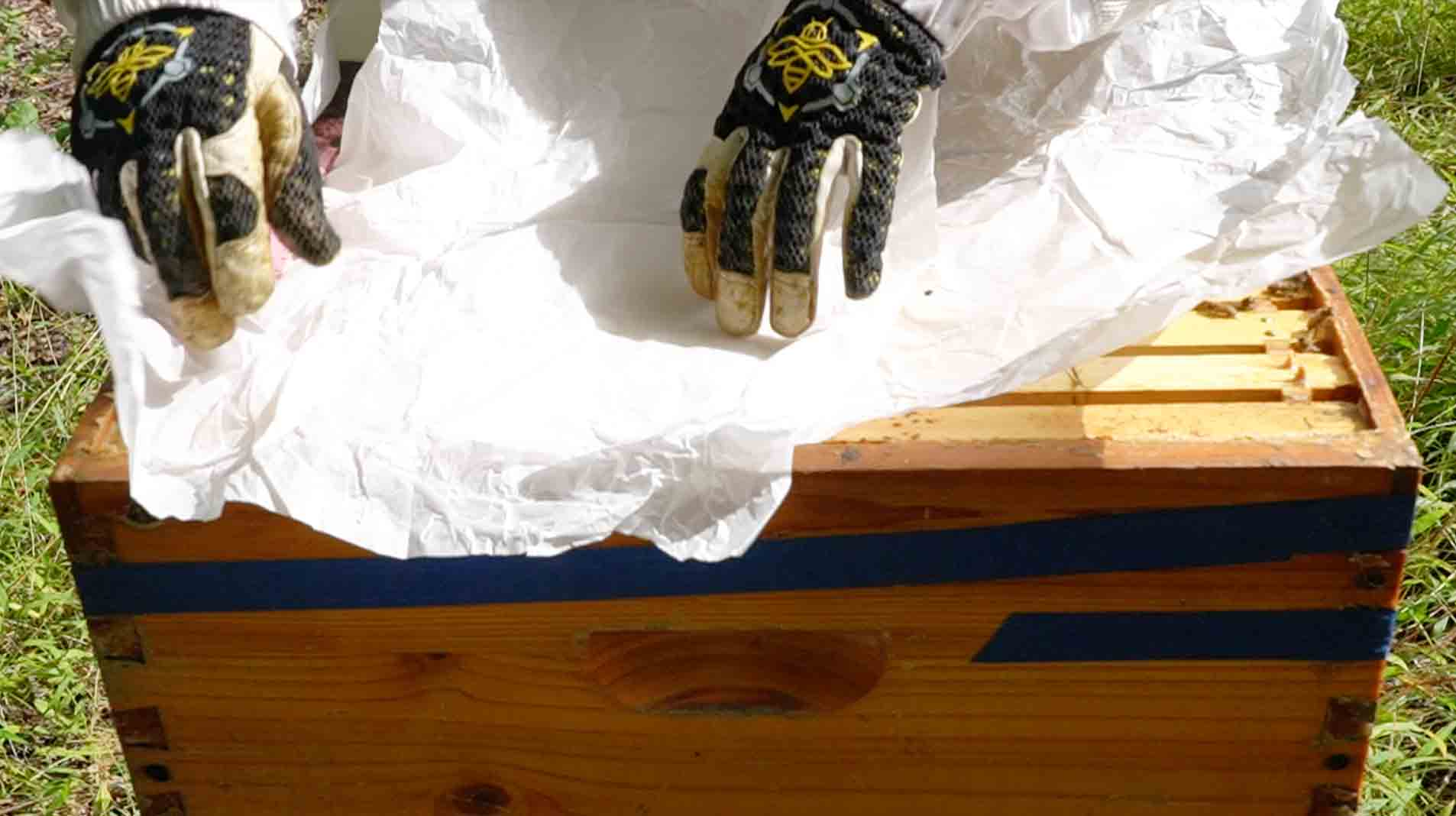
Step 3: Take the lid, inner cover and any feed off of the strong hive. Add a layer of newspaper to the top of the uppermost box as if this newspaper is their new lid. See video above to watch me do this. No need to cut slits in the paper but you can if both hives have a low population.
Step 3: Add the weak box on top making sure to pinch the queen before adding (if they had one).
Step 4: Put the inner cover and lid back on.
Step 5: In 24-48 hours, the bees will have chewed through the paper and become one hive. Remove any remaining newspaper and the box added from the weak hive. Merge brood frames from weak hive into brood nest of hive. Add honey frames anywhere in hive or store in frig for when you need it.
You may see pieces of chewed newspaper on the bottom board. It's always good to check and scrape any pieces off the bottom board before wax moth lavae find it.
Common Beginner Mistakes to Avoid
Do not merge hives together with their queens and let the hive "figure it out".
Do not merge a hive that was a recent swarm you caught if the swarm was smaller than a baseball and was never treated. Often times these swarms are bees absconding due to a high varroa mite infestation.
Do not leave merged box on top of the hive and leave all the frames as is. Move brood down so that they do not get chilled or attract the queen to move up to this box.
Merge hives before treating, not after treating, so that you can ensure all the hives have low mite levels. Some treatments such as formic acid and apiguard can cause small and weak hives to abscond (abandon the hive).